
Nine evangelical leaders explain why heeding public health experts on COVID-19 doesn’t violate their faith but instead demonstrates it.
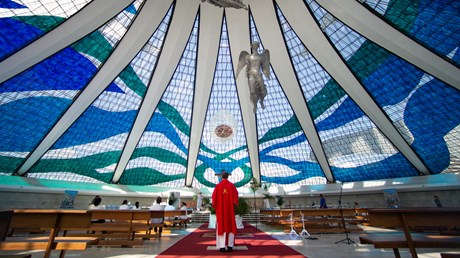
Brazil’s churches have landed on the front lines of a disagreement between state governors and President Jair Bolsonaro over the states’ quarantine measures designed to contain the spread of the new coronavirus, which has sickened more than 11,100 Brazilians and killed 486. Bolsonaro is actively undermining the governors and says a broad lockdown will ultimately destroy Brazil’s economy.
In late March, Bolsonaro passed a decree that added religious activities to the list of “essential services,” meaning sanctuaries could remain open even though citizens were asked to stay home. The decree was overruled by a federal court the following day. On the streets the following Sunday, he again defended people getting back to work.
“Open the churches, please, we need them,” one woman begged repeatedly in one of the videos Bolsonaro posted to social media. He replied with reassuring words.
Political analysts say Bolsonaro is addressing his electoral base—Brazil’s politically powerful Protestants, who helped bring the far-right president to power in the 2018 election—and letting them know they aren’t forgotten. Brazil is home to the world’s largest number of Catholics—some 123 million, according to the last official census. But Protestants are a growing force. The 2010 census counted 42 million believers, about 20 percent of the total population. A survey released in January by Datafolha concluded that Protestants now comprise 1 in 3 Brazilians.
“No political party in Brazil manages to bring together as many people, in as many places, as many times a week as churches do,” Carlos Melo, a political science professor at Insper University in São …