
Until 1883, a Chicagoan asked to tell what time it was could give more than one answer and still be correct.
There was local time, determined by the position of the sun at high noon at a centrally located spot in town, usually City Hall. There was also railroad time, which put Columbus, Ohio, six minutes faster than Cincinnati and 19 minutes faster than Chicago. Scattered across the country were 100 different local time zones, and the railroads had some 53 zones of their own.

To do away with the inevitable confusion, the railroads took the matter into their own hands, holding a General Time Convention in the fall of 1883 at the Grand Pacific Hotel at LaSalle Street and Jackson Boulevard (today, a plaque at the location notes its significance). Its purpose: to develop a better and more uniform system of railroad scheduling. The Standard Time System — based on the mean solar time at the central meridian of each time zone — was formally inaugurated on Sunday, Nov. 18, 1883, a day that came to be known as the “Day of Two Noons.”

» Daylight saving time, also known as “fast time” back in the day, had its first run in the U.S. when President Woodrow Wilson signed it into law in 1918 to support World War I efforts. It didn’t last. The law was repealed seven months later.
» Robert Garland, a Pittsburgh industrialist, is considered the father of daylight saving time in the U.S. He learned of the concept in the United Kingdom.
» With no federal law on the books, cities across the nation — including Chicago — adopted their own ordinances. These decisions were often over the objections of farming interests in the state legislatures. Votes by the general public and Chicago City Council decided the city would observe daylight saving time from the last Sunday of April to the last Sunday of September beginning in 1921. Some suburbs also adopted that plan.
» On March 1, 1936, Chicago shifted its clocks ahead, but not just for a few months. The city council decided Chicago would be on eastern standard time for the entire year. That day’s front-page story in the Tribune touted the new ordinance’s many benefits:
“Today that extra hour of daylight in the afternoon will mean chiefly that you and your family will have that much more time to be out-of-doors. Tomorrow it will mean, in addition to the extra hour outside, if you so desire, that you will leave work while there is plenty of light and fewer hazards in the evening traffic rush. Your children will have an extra hour for play when they have left their school classrooms. You will use less light during the evening hours, turning the lights on an hour later.” — Chicago Tribune, March 1, 1936
According to “Spring forward: The annual madness of Daylight Saving Time” by Michael Downing, this change led to only more confusion. The railroads, Chicago Stock Exchange and the Board of Trade went against the city ordinance. The city asked voters in November 1936 what to do, and they wanted a return to central time. The clocks changed back to central standard time on Nov. 15, 1936. That was the end of year-round eastern standard time in Illinois.
» President Franklin D. Roosevelt launched year-round daylight saving time in the U.S. in 1942.
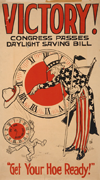
» It wasn’t until the Uniform Time Act of 1966, however, that it was decided the U.S. would observe daylight saving time from the last Sunday of April to last Sunday of October. (States could exempt themselves from this rule.)
» Congress extended the daylight saving time period to 10 months in 1974 and eight months in 1975, in hopes of saving energy after the 1973 oil embargo.
» Further changes to the federal law were made in the 1970s and 1980s.
» The Energy Policy Act of 2005, signed into law on Aug. 8, 2005, states that daylight saving time begins on the second Sunday in March and ends on the first Sunday in November. Parts of Canada have adopted the same change.
Downing’s “Spring forward: The annual madness of Daylight Saving Time” says the Chicago City Council passed a daylight saving ordinance in June 1920. That fall, after the city’s clocks had been turned back to Central Standard Time, poolroom proprietor and gang leader Salvatore “Sam” Cardinella was convicted of murdering saloonkeeper Andrew Bowman.
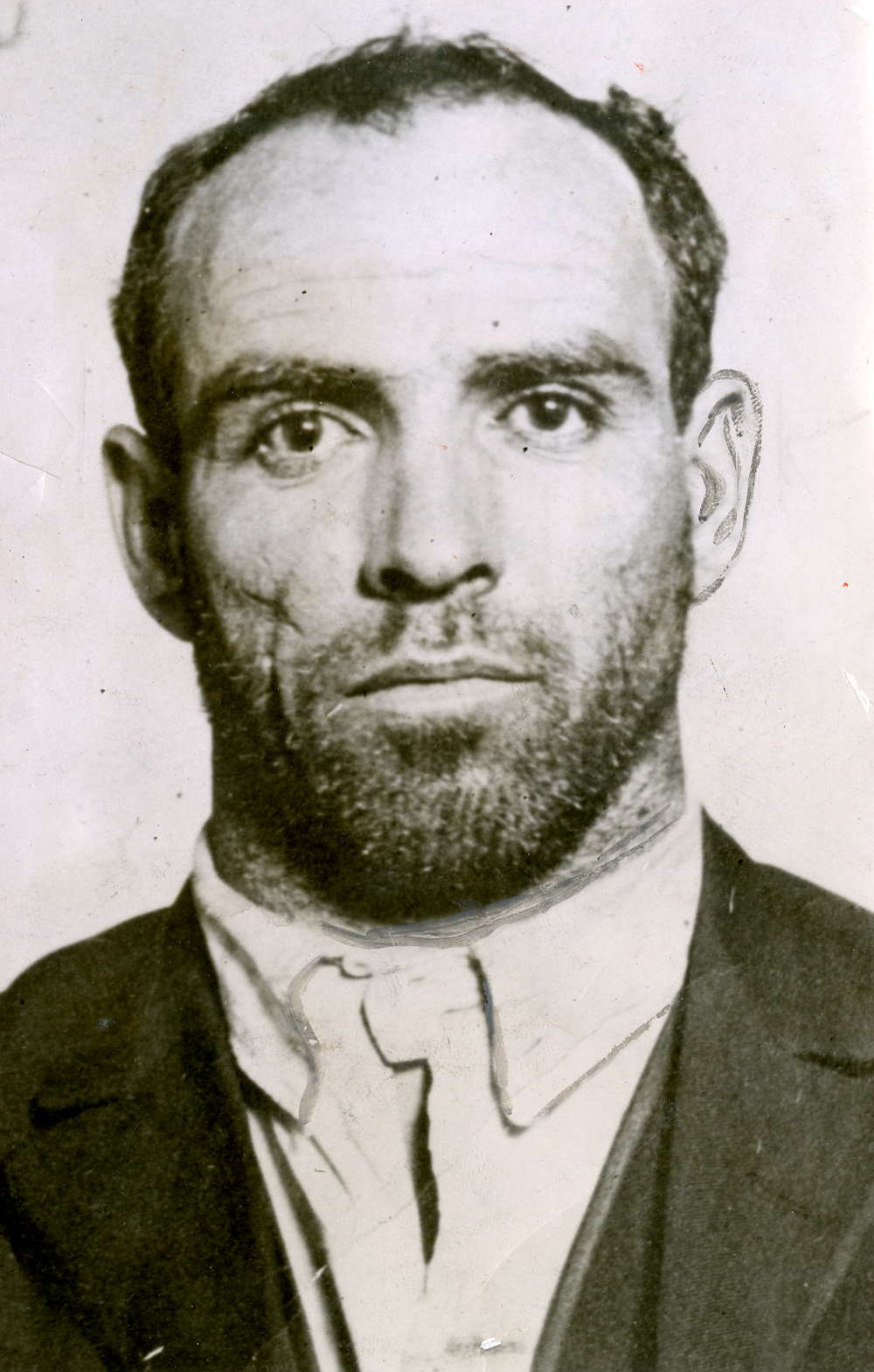
Cardinella, who went by the nickname Il Diavolo (The Devil), was not at the scene of Bowman’s slaying but was convicted of murder under a state law that found the instigator of the crime equally guilty as the killer. His gang reportedly was involved in at least 20 murders, 100 holdups and 150 burglaries.
Il Diavolo was scheduled to die by hanging on April 15, 1921. After several unsuccessful ploys by his henchmen to save his life — including one that would be attempted post-hanging — Cardinella was down to one last try.
The New York Times reported that Cardinella convinced jail officials to spare his life for one additional hour because of daylight saving time. He reportedly said:
“… I was sentenced before the time was changed. This rearrangement deprives me of an hour of life. That won’t mean anything after I’m dead, but will mean a lot Friday morning. The Governor can change his mind in that time.” — The New York Times, April 14, 1921
The jailers complied, and Cardinella’s execution was bumped back to 10 a.m. Reportedly unable to stand at the gallows, he was hanged while seated in a chair at 10:26 a.m. on April 15.